
In the recent electoral spectacle on November 17th, a colossal 5.6 crore voters participated in shaping the destiny of Madhya Pradesh. The intricate tapestry of this political drama unfolded with 2.88 crore male voters, 2.72 crore female voters, and a notable 22.36 lakh youths casted their inaugural votes. The electoral enthusiasm peaked, resulting in a record-breaking 76.22% voter turnout across the state’s 230 assembly constituencies.

The Madhya Pradesh Assembly election of 2023 emerged as a focal point of interest. Since the BJP’s capture of the state in 2003, under the continuous rule of Chief Minister Shivraj Singh Chauhan (excluding a brief interlude of Kamalnath-led Congress government), the political landscape has been shaped.
Anticipating a formidable anti-incumbency sentiment brewing on the ground in the months leading up to the election, the BJP acted decisively to mitigate the impending defeat. Notably, the party refrained from declaring a Chief Ministerial candidate and encouraged senior leaders and MPs to contest the assembly elections. On the other side of the political spectrum, the Congress, spearheaded by Shri Kamalnath, predominantly waged its campaign on the narrative of 18-years of anti-incumbency against the BJP government.
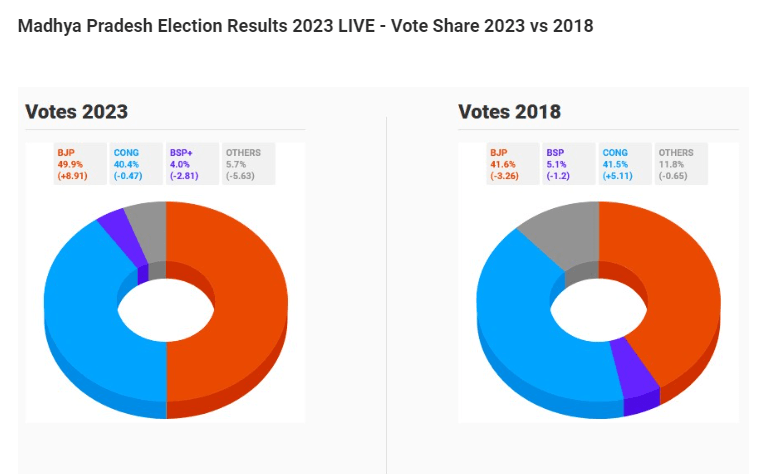
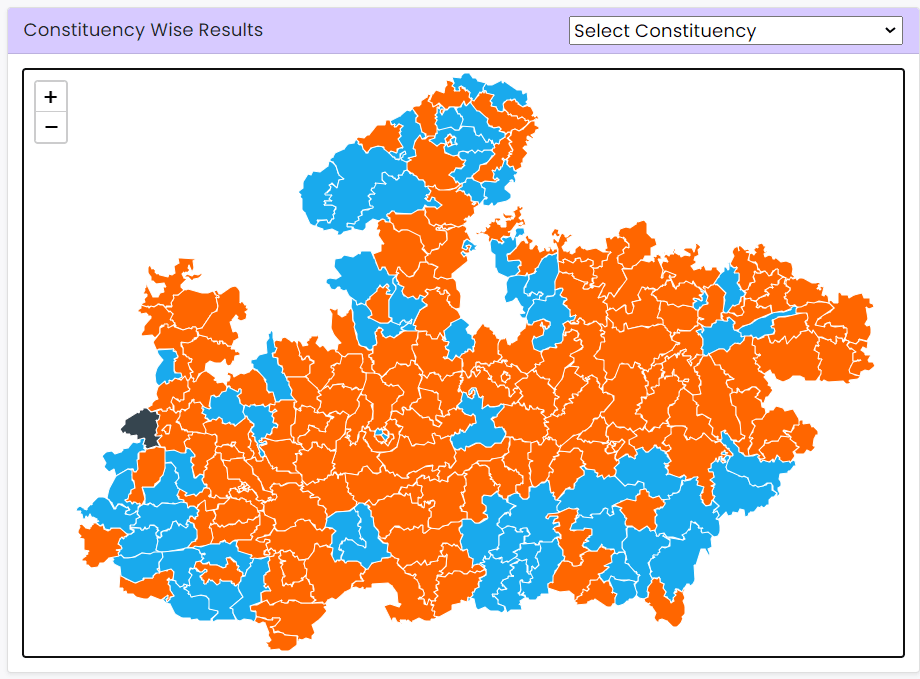
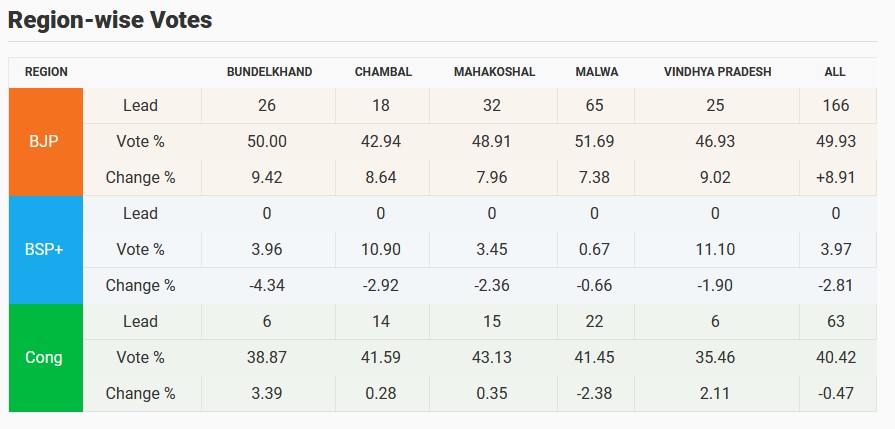
In a diverse political tableau, smaller players like the Bharat Adivasi Party contested all 230 seats, while BSP and Gondawana Ganatantra Party (GGP) formed a pre-poll alliance, vying for 181 and 37 seats, respectively. The pre-election exit polls reflected a mixed bag of opinions, with varying predictions from different pollsters. However, the true outcome on December 3rd, 2023, revealed BJP’s triumphant win with 163 seats out of 230, contrasting starkly with Congress’ 66 seats. BJP’s vote share surged by 7.5% to reach 48%, while Congress garnered 40.4% of the votes. The distribution of SC and ST reserved seats showcased BJP’s dominance in 26 SC seats and 26 ST seats, compared to Congress’ 8 SC seats, 20 ST seats, and Bharat Adivasi Party’s lone seat.
Understanding the ground reality of an impending anti-incumbency wave, the BJP strategically addressed the concerns by ensuring a change in leadership and motivating its MPs to contest the state Vidhan Sabha elections. The party’s focus on women voters became pivotal, as evidenced by the introduction of women-centric welfare schemes like Ladli Behna and Ladli Lakshmi, along with post-election discussions revealing a higher turnout of women voters in 34 constituencies.
Despite facing a fatigue factor after nearly two decades in power, the BJP navigated through Madhya Pradesh’s political landscape by emphasizing organizational strength, effective coordination, and a combination of Hindutva, development, and welfare politics. Prime Minister Narendra Modi’s enduring popularity further bolstered the party’s performance, outshining its rival Congress in key constituencies.
While Congress adopted a soft Hindutva approach, led by Kamal Nath’s pro-Hindu stance, the party’s attempts to appeal to traditional BJP vote banks faltered. The alliance with the Bajrang Sena and promises to temple priests failed to make the desired impact, allowing the BJP’s strong Hindutva narrative to prevail.
The crucial Gwalior-Chambal region, once a stronghold for Congress, witnessed a shift in dynamics after Jyotiraditya Scindia’s departure to the BJP in 2020. The Congress, lacking organizational strength, faced additional challenges when Scindia took a chunk of cadre with him, further diminishing the party’s stand.
In a strategic move, the BJP fielded 7 MPs in the state elections, with 5 emerging victorious. This strategic decision contributed to the party’s overall success, although Union Minister, Faggan Singh Kulaste and Member of Lok Sabha, Ganesh Singh faced defeat.
In a surprising turn of events on December 11th, the BJP’s Central Leadership named an OBC leader and MLA from Ujjain Dakshin Shri. Mohan Yadav, as the new Chief Minister of Madhya Pradesh. The state also saw two Deputy Chief Ministers, with Shri. Jagdish Devda, a Dalit leader from Malhargarh, and Shri. Rajendra Shukla, a Brahmin leader from Rewa. Union Agriculture Minister Shri Narendra Singh Tomar, victorious in the assembly election, was chosen for the role of Speaker of the House.
In summary, the Madhya Pradesh Assembly Elections of 2023 exemplify how the BJP effectively transformed an anti-incumbency wave into a pro-incumbency factor, securing a sweeping victory across the state. This intricate political saga reflects the dynamic interplay of leadership strategies, voter sentiments, and regional dynamics in shaping the political landscape of Madhya Pradesh.
———————————————————————————————————————
References:-
- https://results.eci.gov.in/AcResultGenDecNew2023/index.htm
- https://www.cnbctv18.com/photos/politics/narendra-kumar-to-faggan-singh-kulaste-9-bjp-mps-who-lost-in-assembly-elections-2023-18480801-4.htm
- https://www.hindustantimes.com/india-news/mp-election-results-union-minister-faggan-kulaste-state-hm-narottam-mishra-among-big-losers-101701618239236.html
- https://mpcg.ndtv.in/madhya-pradesh-news/bjps-strategy-did-not-work-in-satna-assembly-seat-mp-ganesh-singh-lost-to-congress-candidate-siddharth-kushwaha-4645391
- https://scroll.in/article/1060017/five-reasons-that-may-explain-bjps-staggering-win-in-madhya-pradesh
- https://www.thequint.com/elections/madhya-pradesh-election/2023-madhya-pradesh-elections-why-congress-lost-to-bjp
- https://indianexpress.com/article/political-pulse/5-reasons-bjp-won-madhya-pradesh-congress-lost-plot-9058699/
- https://www.thehindu.com/elections/madhya-pradesh-assembly/madhya-pradesh-sees-its-highest-ever-assembly-polls-voter-turnout-at-7622-seoni-tops-list/article67547946.ece


 Vidhan Bharat
Leave a comment