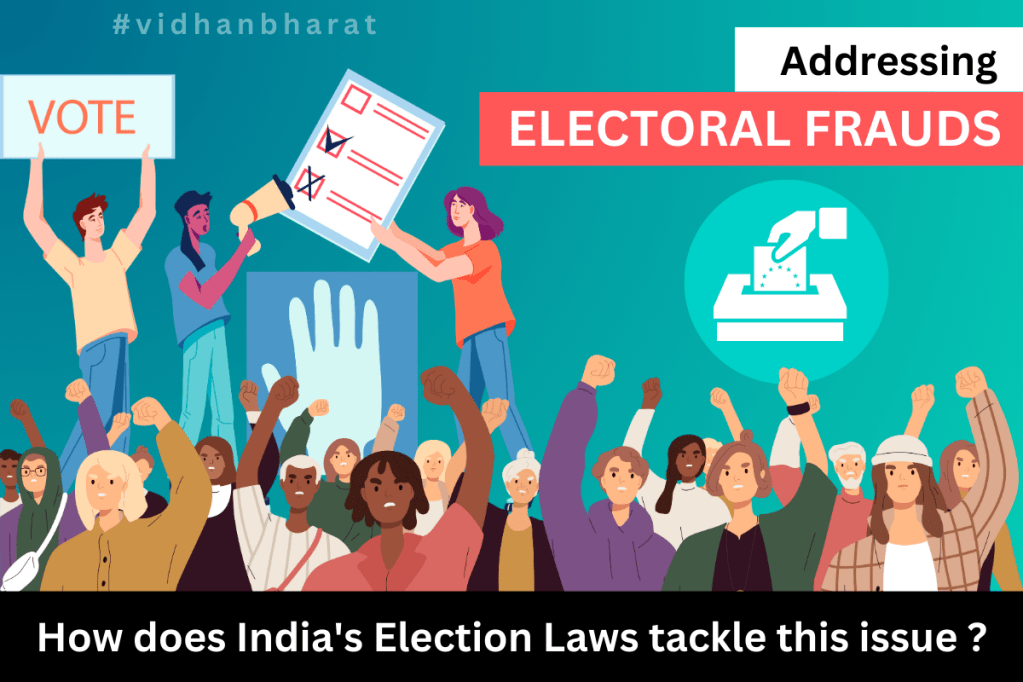
Elections are an integral part of any democracy and India, as the world’s largest democracy, has a long history of conducting free and fair elections. However, over the years, there have been several instances of malpractices and issues related to electoral processes which have called for the need for election reforms.
The roots of election reforms in India can be traced back to the British colonial era when the first general elections were conducted under the Government of India Act 1935. After independence in 1947, significant changes were made to the electoral system through amendments to the Constitution and the enactment of two key laws such as Representation of People Act (1950) and the Representation of People Act (1951). The RPA 1950 states allocation of seats, defines constituencies, sets voter qualifications, and handles electoral procedures, whereas RPA 1951 regulates parliamentary and state elections, membership qualifications, address offenses, and resolve election disputes. Both the Acts are still in practice as separate laws while they were amended a few times to adjust to new realities.
An independent body known as the Election Commission of India (ECI) with complete autonomy to conduct free and fair elections without any interference from political parties or government bodies was established. Since then the ECI has been actively working towards introducing various measures to ensure transparency and fairness in the electoral process.
The need for amendments in Election Laws arose due to several factors. Firstly, there have been numerous instances of candidates using money power to influence voters during elections. This not only goes against ethical principles but also undermines the democratic process. Secondly, the rise in criminalization within politics erodes public trust in elected representatives. Also, with social media playing a crucial role in shaping public opinions and influencing voting patterns, it became necessary to incorporate provisions for regulating elections and its related campaigning activities.
India has faced several major cases of electoral fraud in the past. Despite the frequent confusion between the terms “voter fraud” and “electoral fraud,” they are two different ideas. When a voter engages in unlawful activity, it is referred to as voter fraud. Conversely, unlawful meddling with the electoral process by the candidates or their supporters is referred to as electoral fraud. A prominent instance of electoral malpractice as proven in the High Court occurred in 1975, involving then Prime Minister Smt. Indira Gandhi. Following her conviction for electoral malpractice by the Allahabad High Court, she was prohibited from holding public office for a period of six years1. Another illustration is of the 1987 J&K Legislative Assembly election, it was allegedly rigged to benefit Shri. Farooq Abdullah’s J&K National Conference2. However, it was not proven in the Court of Law and always remained in the domain of suspicions and speculations. Significant attention was drawn on Shri. Lalu Prasad Yadav, former Bihar Chief Minister and RJD president, who received a five-year jail term in a fodder scam case on October 3, 2013. He was prohibited from contesting elections for six years, including for state legislature, Parliament, President of India, and Vice-President of India. The year 2014 saw the removal of Jayalalithaa from office of the Chief Minister of Tamil Nadu due to the disproportionate assets lawsuit against her3. Likewise, after the police found 183 cartons of alcohol in the cargo vehicle, former Punjab State Cabinet Minister Jagir Kaur was charged under Section 123 of the RPA Act for illegally buying votes4. Despite all of this, it is important to note that over the time India has taken several measures to curb electoral fraud.
Let’s take a closer look at some of the key changes and amendments introduced to curb electoral fraud:
Introduction of Electronic Voting Machines (EVMs) & Voter Verifiable Paper Audit Trail (VVPAT):
In addition to EVMs to prevent malpractices such as booth capturing and bogus voting, VVPAT was also introduced. It is a method that provides physical evidence of each vote cast through an EVM, allowing voters to verify their vote before casting it.
Increase in election expenditure limit:
The Election Commission of India (ECI) in 2022 announced a significant increase in the election expenditure limit for candidates and political parties during elections. According to the amendment introduced in the RPA, 1951, the election expenditure limit for Lok Sabha constituencies has been increased from Rs. 70 lakhs to Rs. 95 lakhs. Similarly, for state legislative assembly constituencies, the limit has been raised from Rs. 28 lakhs to Rs. 40 lakhs. The main reasons behind this increase in election expenditure include inflation and a rise in the costs of campaigning (advertising, rallies, and logistics). Moreover, with technological advancements and changing communication methods, campaigns have become more expensive than ever before.
Ban on anonymous donations & Transparency in political funding:
The Indian government has prohibited anonymous donations to political parties to reduce the influence of illicit funds and enhance transparency through the introduction of electoral bonds in political funding. These bonds, akin to promissory notes, can be purchased by Indian citizens or entities incorporated in India and redeemed by political parties registered under the Representation of People Act (RoPA) 1951.5
Changes in the candidate nomination process:
Reforms in the nomination process seek to ensure that candidates meet certain criteria and standards, potentially reducing the influence of financial backing as the sole determinant of candidacy. This shift aims to promote a more merit-based and representative selection of candidates.
Linking electoral roll data with Aadhaar:
As per the Election Amendment Act 2021, a person’s Aadhaar number may be requested by the electoral registration officer to verify their identification. The Aadhaar number will be needed to authenticate entries in the electoral roll if their name is already on it. If someone can’t provide their Aadhaar number for a valid reason, then they can furnish substitute documents that the central government specifies.6
In conclusion, India’s election laws stand as a robust bulwark against electoral fraud, embodying a commitment to upholding the democratic ethos. Through a harmonious amalgamation of legislative measures, technological innovations, and stringent enforcement, India can fortify its electoral framework, ensuring that the voices of its citizens resonate authentically in the democratic arena.
- [i] 9 of the biggest corruption cases that rocked India during Congress’ rule, right from Indira Gandhi’s time. (2016, December 9). Business Insider. https://www.businessinsider.in/entertainment/9-of-the-biggest-corruption-cases-that-rocked-india-during-congress-rule-right-from-indira-gandhis-time/9-of-the-biggest-corruption-cases-that-rocked-indiaduring-congress-rule-right-from-indira-gandhis-time/slidelist/55898093.cms#slideid=55898158 ↩︎
- [ii] BBC NEWS | South Asia | Kashmir’s flawed elections. (n.d.). http://news.bbc.co.uk/2/hi/south_asia/2223364.stm ↩︎
- [iii] Mahapatra, D., & India, T. O. (2017, February 14). Sasikala’s conviction in wealth case upheld by Supreme Court. The Times of India. https://timesofindia.indiatimes.com/india/sasikalas-conviction-in-wealth-case-upheld-by-supreme-court/articleshow/57140345.cms ↩︎
- [iv] T. (2012, January 14). Former SGPC chief Jagir Kaur, kin booked in liquor recovery case. The Times of India. https://timesofindia.indiatimes.com/city/chandigarh/former-sgpc-chief-jagir-kaur-kin-booked-in-liquor-recovery-case/articleshow/11486293.cms ↩︎
- [v] Chopra, R. (2021, March 30). Explained: Why is the electoral bond scheme being opposed by transparency activists? The Indian Express. https://indianexpress.com/article/explained/electoral-bond-scheme-transparency-elections-7243078/ ↩︎
- [vi] The Election Laws (Amendment) Act, 2021, allows Electoral Registration Officers to require the existing or prospective elector to provide the Aadhaar number for the Purpose of establishing identity on a voluntary basis. (n.d.). https://pib.gov.in/PressReleasePage.aspx?PRID=1884147#:~:text=The%20Election%20Laws%20(Amendment)%20Act,identity%20on%20a%20voluntary%20basis ↩︎



 Vidhan Bharat
Leave a comment