
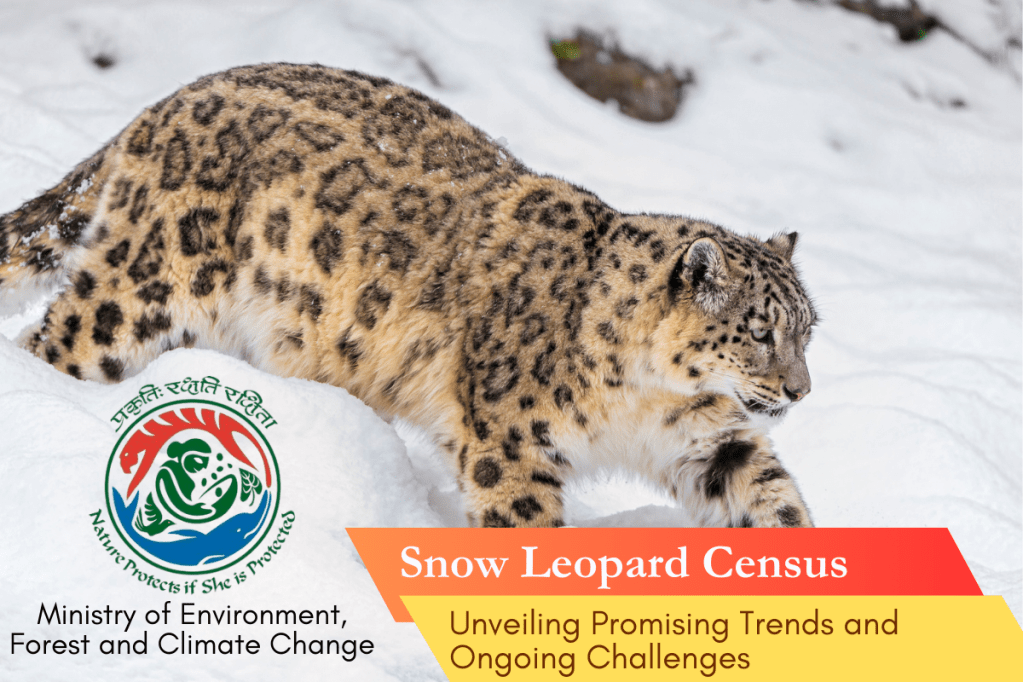
The snow leopard is listed under Schedule I of the Wildlife (Protection) Act, 1972, giving it the highest protection status under the country’s laws. The Union Environment Ministry disclosed that the first-ever survey shows that India is home to an estimated 718 snow leopards.
The Union Environment Ministry disclosed that India is home to an estimated 718 snow leopards, which are also known as the ‘ghost of the mountains’. The data, presented during the National Board for Wildlife meeting in New Delhi on January 30, 2024, stems from the first-ever ‘Snow Leopard Population Assessment in India’ (SPAI) conducted by the Wildlife Institute of India (WII) between 2019 and 2023. 1
The SPAI Program
The Snow Leopard Population Assessment in India (SPAI) Program is the first scientific initiative aimed at evaluating the snow leopard population in India. The Wildlife Institute of India (WII) serves as the National Coordinator for this program, conducted in collaboration with snow leopard range states and two conservation partners, the Nature Conservation Foundation, Mysuru, and the World Wide Fund for Nature – India (WWF-India). The comprehensive two-step framework covered over 70% of potential snow leopard habitats in the trans-Himalayan region, including areas in Ladakh, Jammu and Kashmir, Himachal Pradesh, Uttarakhand, Sikkim, and Arunachal Pradesh.
Coverage of this Report:
Encompassing around 120,000 km 2 of crucial snow leopard habitat across the trans-Himalayan region, the SPAI exercise was conducted for four years using a detailed two-step framework.
The first step involved evaluating snow leopard spatial distribution, incorporating habitat covariates into the analysis, and aligning with the guidelines of the national population assessment of snow leopards in India by the MoEFCC in 2019. In the second step, snow leopard abundance was estimated using camera traps in each identified stratified region.
During the SPAI exercise, total efforts included: 13,450 km of trails surveyed for recording snow leopard signs, while camera traps were deployed at 1971 locations for 180,000 trap nights.
Highlights of the Report: 2
Snow leopard occupancy was recorded at 93,392 km 2 , with an estimated presence of 100,841 km 2 . A total of 241 unique snow leopards were photographed. Based on data analysis, the estimated population in different states are as follows: Ladakh (477), Uttarakhand (124), Himachal Pradesh (51), Arunachal Pradesh (36), Sikkim (21), and Jammu and Kashmir (9).
Until recent years, the snow leopard range in India was undefined due to a lack of extensive nationwide assessments for this vulnerable species. Before 2016, approximately one-third of the range (around ca. 100,347 km2) received minimal research attention, reduced to just 5% in pockets like Ladakh, Jammu & Kashmir, Uttarakhand, and Himachal Pradesh.
Recent status surveys have significantly increased understanding, providing preliminary information for 80% of the range (about 79,745 km2), compared to 56% in 2016. The SPAI exercise used a vast network of video traps to monitor habitats to obtain reliable data on the number of snow leopards.
The research also highlights the necessity for establishing a specific Snow Leopard Cell at WII under the MoEFCC with emphasis on long-term population monitoring backed by systematic field surveys and well-planned study designs.
The long-term survival of snow leopards depends on consistent monitoring. States and UTs may want to employ a periodic population estimation approach in the snow leopard region estimating the population every four years. These routine evaluations will provide insightful information for recognizing obstacles, dealing with dangers, and developing successful conservation plans.
Challenges:
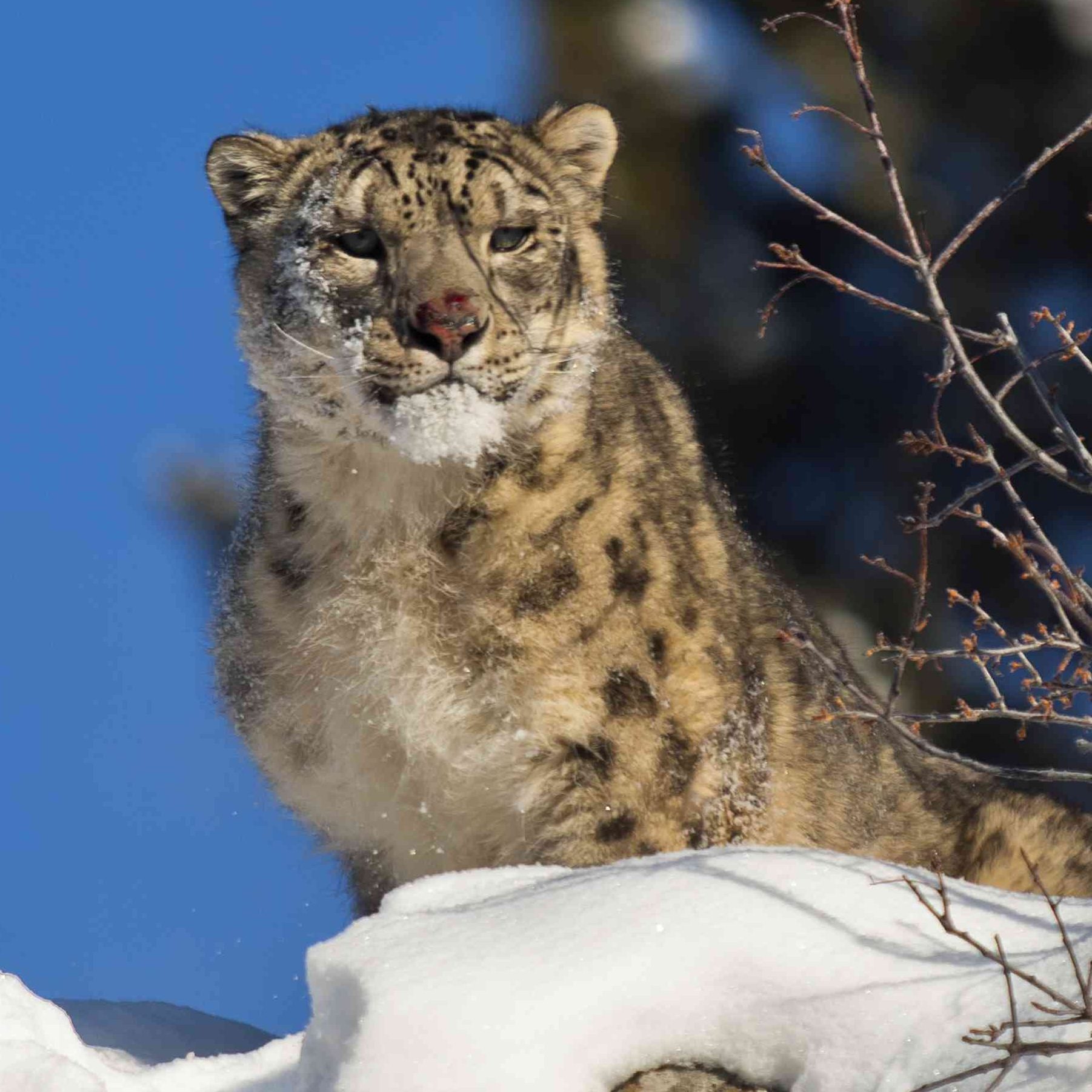
Snow leopards, who occupy one-third of the world’s landmass are essential to the ecological balance.3 Many species are at risk if their population declines. They have evolved for high-altitude conditions, and their distinct physical makeup guarantees maneuverability in challenging, steep settings. Threats to snow leopards include habitat loss, poaching, and dwindling prey, global warming, human-wildlife conflict in the high Himalayas.
Conservation Programs:
The Government of India has identified the snow leopard as a flagship species for the high- altitude Himalayas. It has developed a Project Snow Leopard to conserve the species and habitats.
“Himal Sanrakshak” is a community volunteer program, to protect snow leopards, launched on October 23, 2020.
First National Protocol was also launched in 2019 on Snow Leopard Population Assessment which has been very useful for monitoring populations.
Conclusion:
There is an increased risk of extinction of Snow Leopards which needs to be addressed for their conservation considering climate change and the rise of temperature. However, the Snow Leopard Population Assessment in India (SPAI) Program, facilitated by collaborative efforts and meticulous methodologies, marks a significant stride towards the conservation of snow leopards, enhancing understanding and aiding future conservation initiatives.
References:
1) Koshy, J. (2024) First-ever survey puts India’s snow leopard count at 718. The Hindu. Retrieved
from: https://www.thehindu.com/sci-tech/energy-and-environment/first-ever-survey-puts-indias-snow-leopard-count-at-718/article67793739.ece
2) PIB. (2024). Shri Bhupender Yadav releases the status report of Snow Leopards in India (2024).
Ministry of Environment, Forest and Climate Change. Retrieved from:
https://pib.gov.in/PressReleaseIframePage.aspx?PRID=2000545
3) Ghai, R. (2024) Snow Leopard: Enigmatic big cat of high Asia now a national symbol of Kyrgyzstan. Down To Earth. Retrieved from: https://www.downtoearth.org.in/news/wildlife-biodiversity/snow-leopard-enigmatic-big-cat-of-high-asia-now-national-symbol-of-kyrgyzstan-93664





 Vidhan Bharat
Leave a comment