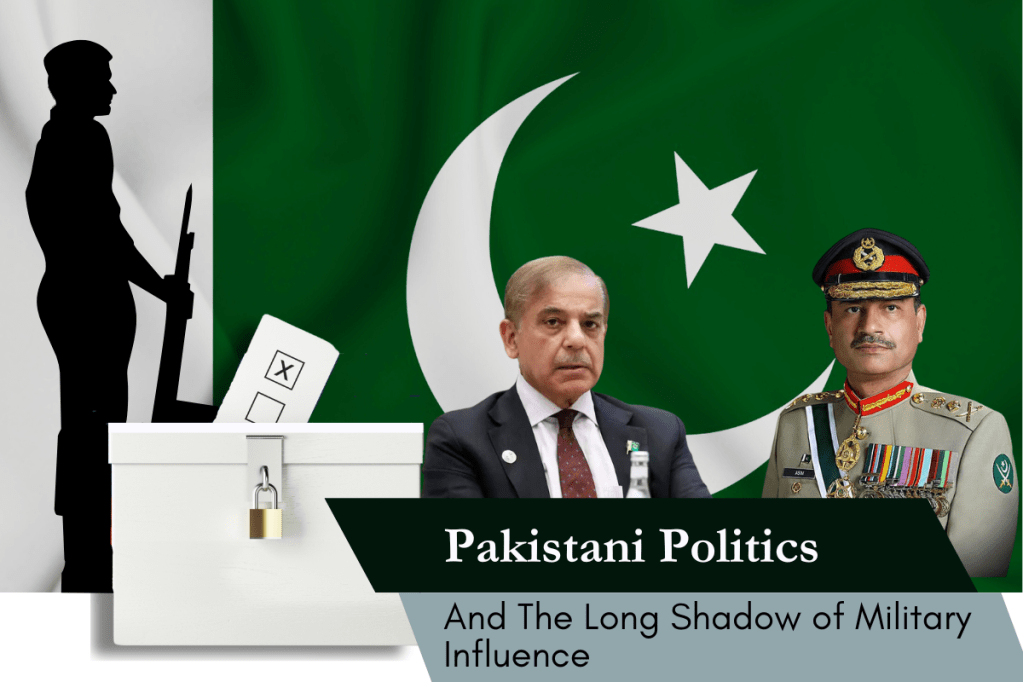
In spite of difficult circumstances, Pakistan held its 12th national and provincial elections on February 8, 2024. Uncertainty shrouded until the last minute on the actual conduct of the election. The country’s top court had to step in to set the date. The assemblies finished their terms and were dissolved in August 2023, as per Pakistan’s rules. But it took a while to sort out the voting areas based on the latest population data.
In the National Assembly, which has 266 directly elected members, the independent candidates emerged victorious on 93 seats. Most of these independents have their allegiance to Imran Khan’s Pakistan Tehreek-i-Insaf party. The Pakistan Muslim League-Nawaz’s (PML-N) candidates won 75 seats, while Pakistan People’s Party (PPP) nominees stood first on 54 seats.1
In Punjab and Sindh provinces, the PML-N and PPP emerged as the largest parties respectively. In Khyber Pakhtunkhwa, independent candidates supported by the PTI won the most seats, while in Balochistan, the PPP and PML-N are the largest parties.
Eventually, all parties except PTI were allocated reserved seats for women and minorities. The PML-N and PPP leaders announced plans to form a coalition government with Shehbaz Sharif as Prime Minister. Other parties, including the Muttahida Qaumi Movement – Pakistan, Pakistan Muslim League (Q), Istehkam-e-Pakistan Party, and Balochistan Awami Party, expressed their intent to join the coalition.
As a result, on March 3, Shehbaz Sharif was re-elected as Prime Minister, securing 201 votes against Omar Ayub Khan’s 92 votes, which was backed by PTI. Thus, despite the fact that not a single party secured a majority in the assembly, Shehbaz became PM with support from PML-N and other parties.
Shehbaz, who is Nawaz Sharif’s younger brother, has emerged as a major player in Pakistani politics. Imran Khan’s PTI faced legal troubles and couldn’t join the race, which led to protests and claims of cheating. Even with all the chaos during the meeting in parliament, with PTI supporters causing a ruckus and saying the election was unfair, Shehbaz still became the PM. Furthermore, Omar Ayub Khan, the opposition leader, wasn’t also happy with Shehbaz’s win. He defended Imran Khan and accused Shehbaz of not following the rules. All this drama took place in Pakistan, a country with a history of ups and downs. They’ve had three constitutions, three military takeovers, and a number of Prime Ministers who didn’t last long.
Historical Accounts
Pakistan’s journey to democracy has been irregular compared to India’s smoother ride. They’ve had arguments about language, the role of Islam, and the role of the military in the power corridors. A military takeover in 1958 didn’t help things. The 1970 elections showed how divided the country was, leading to East Pakistan breaking away. Military leaders like General Zia-ul Haq and General Pervez Musharraf forcefully took over the realms of government, displacing elected leaders in the 1970s and 1990s respectively. When Musharraf left in 2008, people hoped for fair elections, but there were still complaints about the military sticking its nose in the middle of politics. The 2018 elections, where the military had perceived to back Imran Khan’s PTI, reminded everyone that civilian leaders still have a tough time asserting themselves.
As Pakistan tries to settle down after elections, everyone’s still talking about who really runs the show: civilians or the military. Imran Khan’s problems and Nawaz Sharif’s return to politics show how jumbled things are between politicians and the military, making it hard for Pakistan’s democracy to settle down. With all that’s going on, it appears that the Pakistani military and political leaders may be overlooking the voice of the common people. Hope what Mahatma Gandhi once said about politics will come true for struggling democracies like Pakistan – “In the arena of politics, it is the will of the people that shapes the destiny of nations”.
References:
- AIR. (2024, February 12). Pakistan General Elections: Independents Win 93 Seats, PML-N Secures 75, PPP Gets 54 in National Assembly. Retrieved from https://newsonair.gov.in/Main-News-Details.aspx?id=477014 https://indianexpress.com/article/explained/explained-global/short-history-pakistan-elections-democracy-9149758/


 Vidhan Bharat
Leave a comment