Introduction
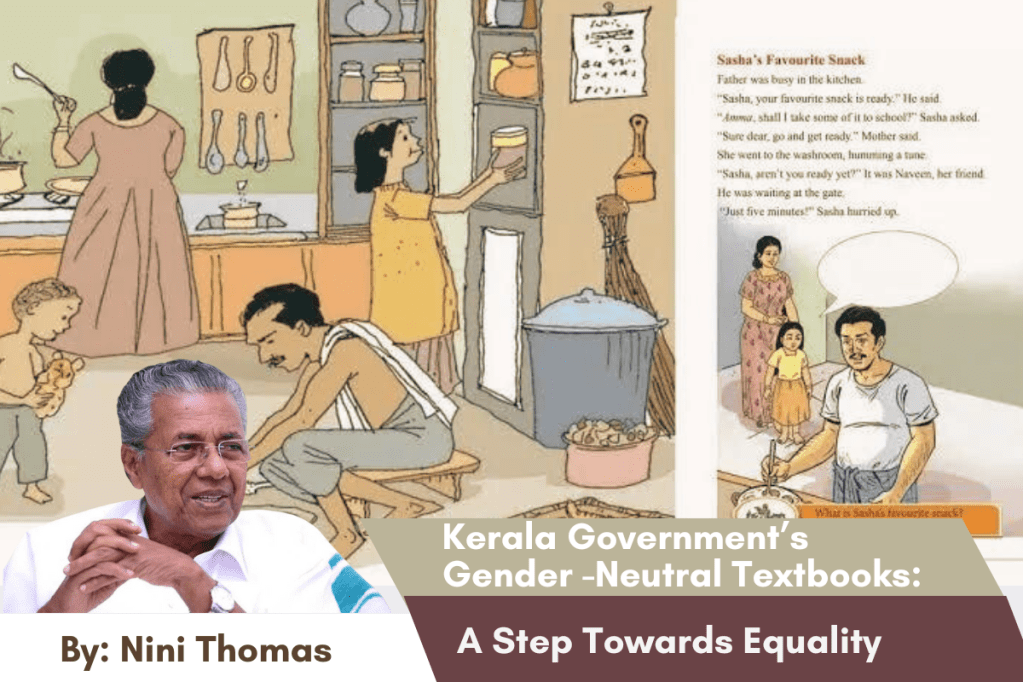
Kerala, a state known for its high literacy rates and progressive policies, has once again set a benchmark by introducing gender-neutral textbooks in its educational curriculum. This pioneering move aims to eliminate gender biases and promote equality from an early age. The initiative reflects the state’s commitment to creating an inclusive society where everyone, regardless of gender, has equal opportunities. This initiative is part of the CPI (M) government’s broader efforts to promote gender-neutral education in Kerala, which also includes introducing gender-neutral uniforms in certain state-run schools 1 .
The Issue of Gender Discrimination in Textbooks
Historically, textbooks have played a significant role in shaping societal norms and attitudes. However, many traditional textbooks have been criticized for perpetuating gender discrimination. They often depict men in professional and leadership roles while relegating women to domestic or subordinate positions. Such portrayals reinforce stereotypical gender roles and limit the aspirations and self-perception of students.
Studies have shown that when children repeatedly encounter gender-biased content, it affects their understanding of what men and women can achieve. Boys might grow up believing that leadership and technical roles are primarily male domains, while girls might feel discouraged from pursuing careers in leadership positions or science, engineering, technology, and mathematics (STEM).
Relevance of Introducing Gender-Neutral Textbooks
The introduction of gender-neutral textbooks in Kerala is a significant step towards addressing gender biases in education. These textbooks are designed to ensure balanced representation by portraying both men and women as capable and successful in various roles, thereby challenging traditional stereotypes. They use inclusive language to avoid gender biases, such as replacing “policeman” with “police officer” and “fireman” with “firefighter.” The textbooks include diverse examples and stories from different walks of life, showcasing individuals of all genders excelling in various fields. Additionally, they incorporate activities and questions that encourage students to think critically about gender roles and equality. This holistic approach aims to create a more inclusive and equitable educational environment.
Positive Impact on Students and Their Gender Perceptions
The positive impacts of gender-neutral textbooks on students and their gender perceptions are manifold. Seeing diverse role models in textbooks can boost the confidence and aspirations of all students, particularly girls, allowing them to envision themselves in roles traditionally dominated by men, such as scientists, engineers, and leaders. By presenting a balanced view of genders, these textbooks help students develop mutual respect capabilities, and aspirations, fostering a sense of equality and cooperation. Exposure to gender-neutral content can inspire students to explore career paths beyond traditional gender roles, enabling both boys and girls to aspire to any profession without feeling constrained by societal expectations. Early exposure to gender-neutral concepts also helps reduce gender-based discrimination and biases, contributing to the development of a more inclusive and equitable society.
Challenges and the Way Forward
Despite the positive intentions, implementing gender-neutral textbooks is not without challenges. Some critics argue that it might be difficult to eliminate ingrained stereotypes overnight. Teachers need adequate training to handle the new curriculum effectively. Additionally, there may be resistance from certain sections of society who are accustomed to traditional gender roles. To ensure the success of this initiative, continuous training and support for educators are crucial. The curriculum should be periodically reviewed and updated to reflect changing societal norms. Moreover, awareness campaigns can help parents and the larger community understand the importance of gender-neutral education.
Conclusion
The struggle for gender neutrality in India has been a long and persistent journey, marked by significant milestones and continuous efforts. Historically, women in India faced considerable obstacles in accessing education, with social reformers like Savitribai Phule and Jyotirao Phule pioneering the movement for women’s education. Savitribai Phule, known as India’s first female teacher, established the first school for girls in Pune in 1848, defying the societal norms of the time. Similarly, Pandita Ramabai’s advocacy in the late 19th and early 20th centuries played a crucial role in advancing women’s education and rights. Despite these early efforts, achieving gender neutrality in education has been an ongoing struggle. The introduction of gender-neutral textbooks in Kerala represents a significant advancement in this journey. These textbooks aim to break down traditional stereotypes by ensuring a balanced representation of genders, using inclusive language, and presenting diverse examples. However, while education has seen significant progress, more efforts are needed in other fields to achieve comprehensive gender inclusion. Observing Kerala’s advancements, other states and countries might adopt similar measures, leading to a more equal and just society globally. The journey from the right to women’s education to gender-neutral textbooks exemplifies the persistent efforts towards gender neutrality and highlights the importance of continued advocacy and reform.
References:
- India Today. (2024, June 18). Kerala’s gender-neutral school textbooks show fathers in kitchens. Retrieved from https://www.indiatoday.in/education-today/news/story/keralas-gender-neutral-school-textbooks-show-fathers-in-kitchens-2554326-2024-06-17




 Vidhan Bharat
Leave a comment