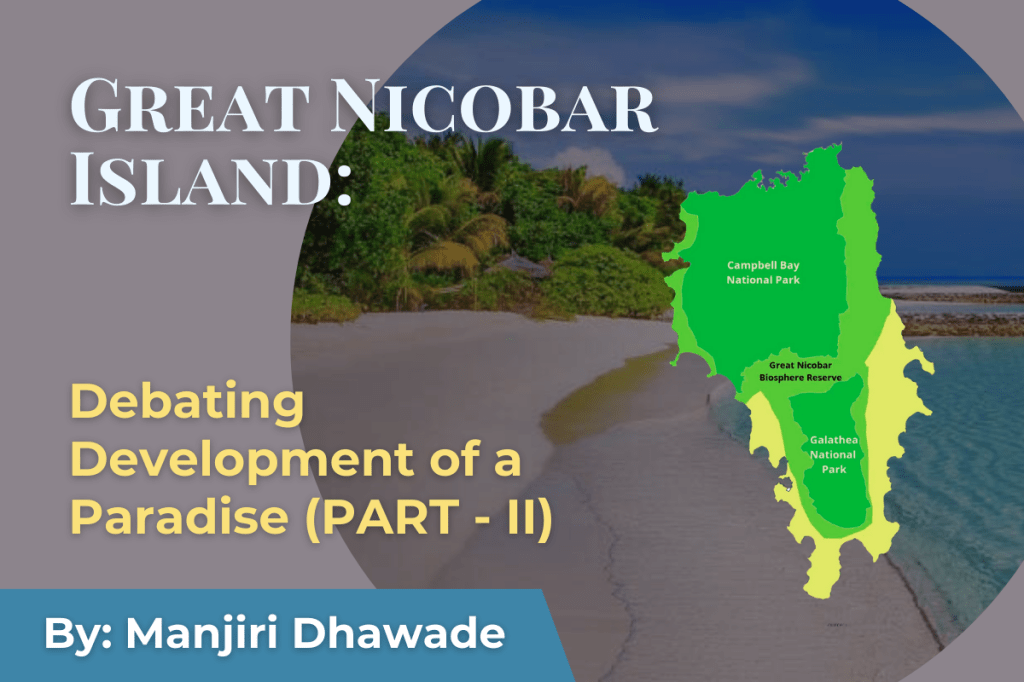
The Great Nicobar Island Development Project represents a monumental undertaking with the potential to significantly transform the region’s economic landscape. Nestled in the southernmost part of India, Great Nicobar Island is not only a strategic asset but also a biodiversity hotspot, home to unique ecosystems and indigenous communities such as the Shompen tribe. This ambitious project aims to develop vital infrastructure, including a transshipment port, enhancing connectivity and economic prospects. But there are multifaceted dimensions of the Great Nicobar Project, seeking a balanced narrative that weighs its economic potential against the imperative of conserving ecological and cultural heritage. However, it also raises crucial questions about environmental sustainability, the preservation of local cultures, and the rights of the island’s inhabitants.
Challenges in the Great Nicobar Development Project:
- The government told Parliament in August 2023 that 9.6 lakh trees could be felled and ‘compensatory afforestation,’ for the loss of this unique rainforest ecosystem, had been planned, thousands of kilometers away, in the vastly different ecological zone of Haryana.1
- The compensatory afforestation in Haryana, despite its intent, will not effectively restore the ecological biodiversity of Nicobar due to the stark differences in vegetation, climate, and flora and fauna between the two regions. The unique ecosystems of Nicobar, which include diverse tropical rainforests and endemic species, cannot be replicated in the distinct temperate environment of Haryana.
- The Environment Ministry, responsible for regulating environmental policy, has chosen to keep the project details confidential. Information on the environmental clearance and appraisal processes, typically made public, has been withheld.
- The project is alleged to violate tribal rights and harm the island’s ecology by felling nearly a million trees. Concerns include the potential destruction of coral reefs, adverse effects on the local marine ecosystem, and threats to the Nicobar Megapode bird and leatherback turtles that nest in Galathea Bay.
- The island administration is pushing the project without the Shompen tribe’s consent. The National Commission for Scheduled Tribes seeks answers. Opposition from various groups highlights ecological harm and risks to the Shompen, a small, vulnerable tribal community. In November 2022, the tribal council revoked a no-objection certificate it had issued for diversion of about 160 sq km of forest land, saying they had not been given full information.2
- The Congress statement, issued by senior leader and former Environment Minister Jairam Ramesh, has also pointed out that the proposed port is in a seismically volatile zone that saw permanent subsidence of about 15 ft during the 2004 tsunami.
- The NCST is investigating a complaint by ex-Tribal Affairs Secretary E.A.S. Sarma about Forest Rights Act violations in the project’s forest clearance, noting the government didn’t consult NCST as required. As of February 2024, government data shows 50,26,801 FRA claims received, with 34.9% rejected and 15.5% pending.3
- Environmentalists have warned that the clear-cutting, blasting, dredging, construction, dumping of debris, ship traffic, pollution of multiple kinds and the enormous influx of outsiders with their animals and germs will devastate the Indigenous people and the creatures who live on and around Great Nicobar.
Way Forward:
The restoration of forest rights for the Shompen people must be prioritized to ensure their traditional livelihoods and cultural heritage are preserved. Additionally, their concerns regarding the issuance of No-objection certificates (NOCs) should be addressed with utmost importance, ensuring their voices are heard and respected in the decision-making process. The transshipment project, while promising economic benefits, poses significant environmental risks such as water pollution, climate change, and the destruction of habitats for endangered marine species.
It is imperative that rigorous discussions focus on conserving ecological biodiversity alongside sustainable development, without infringing upon the rights of Particularly Vulnerable Tribal Groups (PVTGs) residing on Great Nicobar Island. This approach necessitates a balanced and inclusive framework that integrates the socio-cultural and environmental dimensions of development, ensuring that progress does not come at the cost of tribal rights or ecological integrity. By prioritizing both conservation and community welfare, the Great Nicobar Island Development Project can serve as a model of sustainable development that harmonizes economic growth with ecological stewardship and social justice.
Conclusion:
The Great Nicobar Island Development Project is a crucial initiative for the island’s growth, balancing economic progress with ecological preservation. By developing infrastructure like a transshipment port and international airport, the project aims to transform the island into a commercial and tourism hub. Success relies on meticulous planning, inclusive decision-making, and environmental safeguards. Prioritizing Indigenous welfare and sustainable practices, the project seeks to foster economic resilience, social inclusivity, and environmental stewardship, unlocking the island’s potential for a prosperous future. Therefore, the efforts to conserve this ecological gem must prioritize sustainable practices that protect its diverse habitats and respect the rights of its inhabitants. By embracing a holistic approach that integrates economic growth with environmental preservation and social justice, we can ensure that Great Nicobar Island remains a vibrant sanctuary for future generations, exemplifying the harmony between progress and nature.
Part I of this blog is available at: https://vidhanbharat.com/2024/07/09/great-nicobar-island-debating-development-of-a-paradise-part-i/
References:
- Nicobar triangle: On the ₹72,000-crore project on Great Nicobar Island (2024). The Hindu. Retrieved from https://www.thehindu.com/opinion/editorial/%E2%80%8Bnicobar-triangle-on-the-72000-crore-project-on-great-nicobar-island/article68327922.ece.
- Ghanekar, N. (2024). Strategic imperative and environment concern in great nicobar project. The Indian Express. Retrieved from https://indianexpress.com/article/explained/great-nicobar-project-concern-9400418/.
- Ibid.



 Vidhan Bharat
Leave a comment