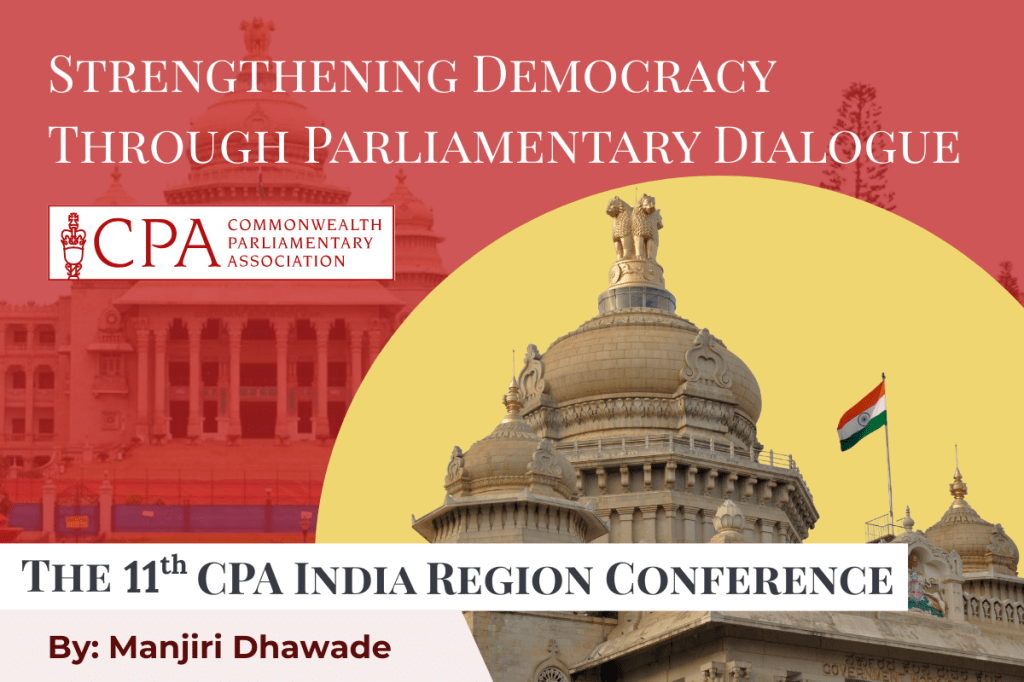
Democracy thrives not merely on elections, but on dialogue, debate, and the collective responsibility of elected representatives to serve the people with integrity and accountability. The 11th Commonwealth Parliamentary Association (CPA) India Region Conference was held from 11th to 13th September, 2025. The Conference was hosted by the Karnataka Legislative Assembly at the iconic Vidhana Soudha in Bengaluru which emerged as a powerful reaffirmation of this democratic spirit. Bringing together presiding officers, legislators, and parliamentary officials from across India, the conference served as a vital platform to reflect on the evolving role of legislatures in strengthening democratic governance.
A Confluence of Democratic Leadership
The conference was inaugurated by Lok Sabha Speaker Shri Om Birla, who emphasized the urgent need for meaningful debate and responsible conduct within legislatures. He highlighted that democracy flourishes not through disruption, but through dialogue rooted in respect, facts, and collective problem-solving. Karnataka Chief Minister Shri Siddaramaiah, along with other dignitaries, echoed similar concerns, underlining the responsibility of elected representatives to safeguard democratic values amid growing political polarization. The conference witnessed the participation of Speakers, Deputy Speakers, Chairpersons of Legislative Councils, Members of Legislative Assemblies, and senior parliamentary officials from across the country.1
Theme and Core Deliberations
The central theme of the conference — “Debates and Discussions in the Houses of Legislature: Building People’s Trust, Meeting People’s Aspirations” — set the tone for a series of meaningful and forward-looking deliberations. Discussions focused on strengthening the quality of legislative debates to ensure they remain constructive, informed, and issue-oriented rather than confrontational. Emphasis was placed on reducing disruptions in legislative proceedings and fostering a culture of decorum and mutual respect within Houses. Participants highlighted the growing importance of robust research and knowledge support systems to enable lawmakers to engage in evidence-based policymaking. The role of technology in enhancing legislative efficiency, transparency, and public accessibility was also widely discussed, alongside the need to encourage greater participation of youth and women in democratic institutions. Collectively, these deliberations reinforced the view that legislatures must evolve as spaces of informed dialogue, where accountability and constitutional responsibility remain paramount in sustaining public trust.
Key Outcomes and Resolutions
One of the most significant outcomes of the conference was the adoption of a set of forward-looking resolutions aimed at strengthening legislative functioning across the country. Delegates agreed on the need to minimize disruptions in legislative proceedings to ensure optimal use of House time and more productive lawmaking. The conference emphasized strengthening research and reference services to support evidence-based decision-making and improve the overall quality of legislative debates. Participants also underscored the importance of adopting digital innovations to modernize legislative processes and enhance transparency. Special emphasis was placed on encouraging greater participation of youth and women in parliamentary processes, recognizing their role in shaping an inclusive democratic future. These outcomes reflect a collective commitment to making legislatures more responsive, transparent, and people-centric.
A National Legislative Index (NLI) was proposed by Speaker Shri Om Birla to rank state assemblies/councils based on metrics like House productivity, debate quality, committee effectiveness, and technology use — with further discussion planned at a future presiding officers’ conference.2 Together, these outcomes reflect a shared commitment to building legislatures that are more responsive, accountable, and people-centric.
The conference concluded on 13 September 2025 with an address by the Governor of Karnataka, Shri Thaawar Chand Gehlot, emphasizing the timeless value of strong legislative institutions. It is worth noting that 45 presiding officers from 26 states/union territories participated in the conference, including 22 Assembly Speakers, 16 Deputy Speakers, 4 Chairpersons, and 3 Deputy Chairpersons. Participants celebrated collaborative achievements and reaffirmed commitments to parliamentary best practices. 3
Special Recognition
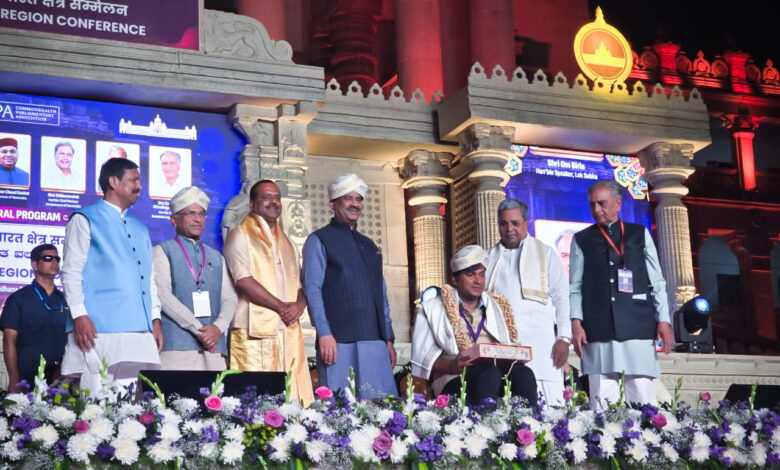
Dr. Rahul V. Karad, Founder of NLC Bharat, was felicitated by Lok Sabha Speaker Shri Om Birla for his contributions to strengthening democratic dialogue and legislative capacity building.4 It was noted that under his leadership, NLC Bharat has emerged as a national platform uniting legislator from across India, with its inaugural conference in Mumbai in June 2023 drawing participation from over 1,800 legislators.5
A Platform for Learning and Collaboration
Beyond formal sessions, the conference served as an important platform for cross-learning and collaboration among states. Delegates exchanged best practices on legislative management, citizen engagement, and the use of technology in governance. The interactions highlighted the importance of cooperative federalism and shared democratic values within India’s parliamentary framework. The event also reaffirmed the importance of continuous capacity building for legislators, emphasizing that strong democracies depend on informed and well-equipped representatives.
About the Commonwealth Parliamentary Association (CPA)
The Commonwealth Parliamentary Association (CPA) is one of the oldest parliamentary associations in the world, bringing together legislatures from across the Commonwealth to promote democratic governance, good parliamentary practices, and institutional cooperation. The CPA India Region serves as a vital platform for collaboration among Indian legislatures, facilitating knowledge exchange, capacity building, and dialogue on strengthening parliamentary democracy. Through conferences, training programs, and knowledge-sharing initiatives, the CPA plays a crucial role in nurturing democratic values and institutional excellence.
Conclusion
The 11th CPA India Region Conference stood as a powerful reminder that democracy is sustained not merely by constitutional structures, but by continuous dialogue, mutual respect, and institutional integrity. At a time when democratic institutions worldwide face increasing challenges, the conference reaffirmed India’s commitment to strengthening parliamentary democracy through constructive engagement and reform. By fostering dialogue, encouraging innovation, and reinforcing accountability, the conference successfully advanced its core objective — strengthening democracy through parliamentary dialogue.
References:
- https://www.newindianexpress.com/states/karnataka/2025/Sep/12/legislatures-turning-into-political-blame-game-arenas-rues-om-birla
- https://www.newindianexpress.com/states/karnataka/2025/Sep/14/birla-moots-national-legislative-index?
- https://pprloksabha.sansad.in/PressReleaseFiles/file1462.pdf
- https://metrotimesindia.com/dr-rahul-v-karad-founder-of-national-legislators-conference-nlc-bharat-felicitated-at-11th-cpa-india-region-conference-in-bengaluru
- https://indianexpress.com/article/cities/pune/rahul-karad-felicitated-at-legislators-conference-10263186/



 Vidhan Bharat
Leave a comment