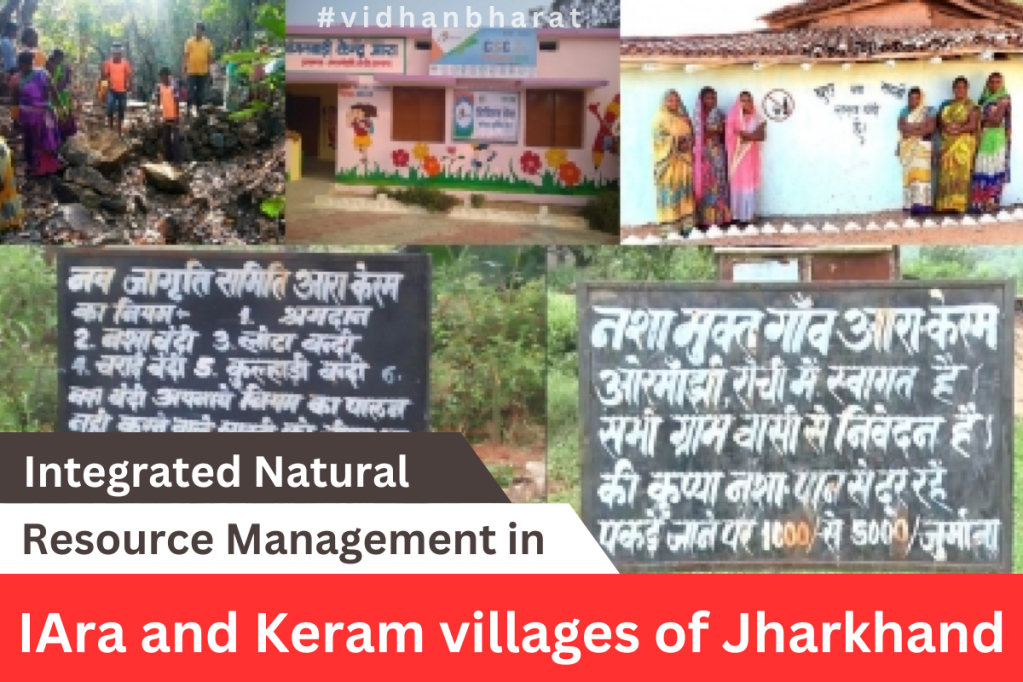
In the heart of Jharkhand, nestled amidst the scenic beauty of Ormanjhi block, lie two neighboring villages – Ara and Keram. In 2018, these villages faced a severe drought that affected every aspect of life, from crops and cattle to daily routines and water sources. The government declared them as severely drought-affected areas. However, the community’s unwavering determination and hard work have turned this adversity into an inspiring success story. In just one year, they managed to bring about a remarkable change, echoing the inspirational quote, “Arise! Awake! And stop not until the goal is reached.”
Before their transformation, Ara and Keram villages were plagued by challenges. Water scarcity, migration for employment, rainfed agriculture, monocropping, and a lack of fertile land were some of the key issues. Additionally, they faced social problems such as child marriage, substance abuse, poor personal hygiene, and non-institutional child delivery.
The road to transformation was not easy. Initially, the villagers were unorganized and often migrated in search of employment. However, with the support of a highly motivated team and the involvement of the youth, the community embraced the concept of Integrated Natural Resource Management (INRM). They conducted surveys, formed Self-Help Groups (SHGs), and ensured the participation of women in planning and resource mapping. Training sessions were organized to improve technical skills, adopt new agricultural practices, and explore modern technology.
Inspired by the success of Ralegan Siddhi in Maharashtra, representatives from Ara and Keram villages visited Ralegan to witness the positive changes brought about by the local community. This visit served as a turning point, motivating the villagers to take control of their resources, manage water effectively, and ensure the sustainability of their ecosystem.
Subsequently, Ara and Keram villages received support from various agencies, including under the Mahatma Gandhi National Rural Employment Guarantee Act and from the Jharkhand State Livelihood Promotion Society. These agencies promoted community involvement and facilitated discussions on work progress and challenges.
The forest department also played a crucial role by helping the villagers treat 25 hectares of land through afforestation. Additionally, they provided seeds, agricultural inputs, and equipment such as drip irrigation systems and pump sets.
The transformation of Ara and Keram villages has been remarkable. Agriculture has become the main source of livelihood, replacing wage labor and forest dependency. Water harvesting structures and ponds have been constructed and used for agriculture and fisheries. The protection and rejuvenation of nearly 80 hectares of neighboring forests have helped sustain the ecosystem. Fish farming in the ponds has provided substantial income to the villagers.
Ara and Keram villages now serve as role models for sustainable development. Their success has inspired the adoption of similar strategies and technologies in nearby villages, such as Baridih. This approach encourages water recharge and soil productivity for long-term development and sustainability.
The transformation was not limited to the economic and ecological aspects. The villagers, inspired by Ralegan Siddhi, initiated a cleanliness drive called Shramdaan. This event fosters unity and cleanliness in the community.
A village committee has been constituted to protect the forest and natural resources. They have imposed strict rules against using plant/forest debris for personal use and prohibited tree felling. Women’s groups have played a significant role in mobilizing the community and preventing the indiscriminate felling of trees. As a result, Ara and Keram villages were declared “Model Villages” by the former Chief Minister of Jharkhand Shri Raghubar Das. This recognition stands as a testament to the villagers’ determination and their ability to transform adversity into success.






 Vidhan Bharat
Leave a comment