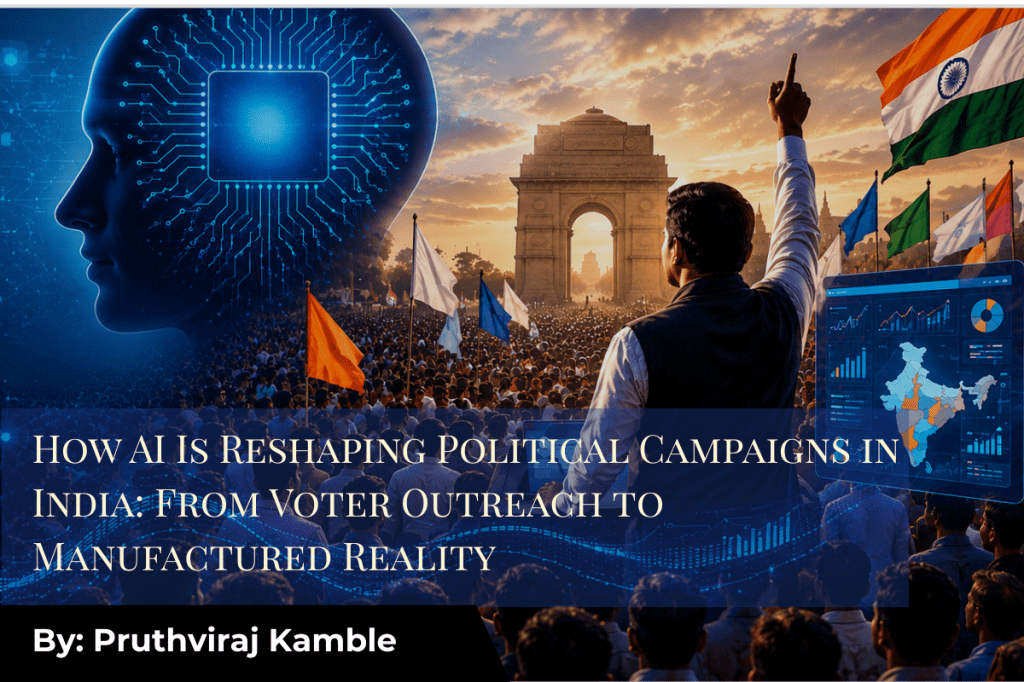
In India’s evolving electoral landscape, political persuasion is no longer shaped only through rallies, speeches, television debates, or newspaper campaigns. Increasingly, it is being engineered through algorithms, synthetic media, and Artificial Intelligence (AI)-driven voter targeting. The 2024 Lok Sabha elections marked a significant shift in Indian political communication, where AI became an active campaign instrument rather than merely a technological accessory.
From multilingual speeches and AI-generated videos to voter sentiment analysis and automated WhatsApp outreach, political parties across India are rapidly integrating AI into campaign strategies. However, while AI has improved communication efficiency and expanded digital outreach, it has simultaneously intensified concerns regarding misinformation, emotional manipulation, and the erosion of democratic trust.
India presents a particularly significant case in this transformation. With over 950 million internet users, widespread smartphone penetration, and one of the world’s largest youth electorates, digital political communication now shapes public opinion at an unprecedented scale (Internet and Mobile Association of India, 2024). Moreover, in a country where political information is increasingly consumed through WhatsApp forwards, short videos, memes, and social media clips, AI-generated content can rapidly influence public perception before verification mechanisms can respond.
Political parties across ideological lines have started deploying AI-driven communication systems. According to recent reports, parties in Tamil Nadu, Kerala, Assam, and West Bengal established specialized AI campaign teams to produce hyperlocal content, multilingual messaging, and automated voter engagement strategies (Moneycontrol, 2025). These systems enable campaigns to tailor political narratives according to region, language, caste composition, and voter behavior patterns.
Tamil Nadu offers one of the clearest examples of AI’s emotional and symbolic impact on electoral politics. During the 2024 election cycle, AI-generated recreations of deceased Dravidian leaders such as M. Karunanidhi and J. Jayalalithaa appeared in campaign-related digital content (NDTV, 2024). These synthetic videos attempted to reconnect emotionally with long-standing voter bases by digitally reviving iconic political figures. While supporters viewed such efforts as technological innovation, critics argued that they crossed ethical boundaries by using deceased personalities to shape contemporary political narratives.
Ahead of the 2026 Tamil Nadu Assembly elections, AI-generated political videos involving former Chief Minister C.N. Annadurai and actor-politician Vijay also circulated widely online, further highlighting the growing normalization of synthetic political media (The Times of India, 2025). In a state where cinema, symbolism, and charismatic leadership historically influence electoral behavior, AI amplifies emotional political communication at an unprecedented scale.
West Bengal demonstrates another dimension of AI-driven politics: algorithmic polarization. Electoral discourse in the state has increasingly shifted toward digitally amplified identity narratives, meme wars, and emotionally provocative campaign content. Political strategists now rely heavily on algorithmic engagement systems to push region-specific narratives and maximize online visibility (Al Jazeera, 2024). This transformation is particularly significant because younger voters increasingly consume political information through short-form digital platforms rather than traditional journalism. As a result, emotionally charged AI-generated content often travels faster than fact-based political analysis.
Kerala presents a more complex picture. As one of India’s most literate and digitally connected states, Kerala’s political campaigns have adopted AI for issue-based targeting, multilingual outreach, and constituency-level voter engagement (Moneycontrol, 2025). However, Kerala also demonstrates that technological sophistication alone does not guarantee political influence. The state’s historically high political awareness and strong ideological culture continue to shape voter behavior beyond algorithmic persuasion. This suggests that while AI can optimize communication, it cannot completely override deeply rooted political consciousness.
In Bihar, concerns surrounding AI have focused more directly on misinformation and electoral integrity. Ahead of the Bihar Assembly elections, the Election Commission of India (ECI) issued advisories against the use of AI-generated deepfakes and misleading synthetic political content (Medianama, 2025). The Commission emphasized transparency requirements for AI-generated campaign material, recognizing that manipulated videos and cloned audio clips could seriously distort democratic processes.
The rise of deepfakes represents one of the most serious challenges posed by AI-driven campaigning. Earlier forms of propaganda required organizational infrastructure, media access, and substantial financial resources. Today, generative AI tools allow convincing fake speeches, fabricated interviews, and manipulated political videos to be produced within minutes. Researchers increasingly warn that AI-generated misinformation spreads faster than institutional verification systems can respond (Hameleers et al., 2024).
This creates a dangerous democratic condition where voters may begin doubting not only false information, but authentic information as well. Once citizens lose confidence in the authenticity of political communication, democratic trust itself weakens.
At the same time, AI cannot be viewed only through the lens of political threat. AI-driven translation tools, accessibility systems, multilingual campaign outreach, and automated voter information systems have also expanded political communication into previously underrepresented regions and communities. In a linguistically diverse country like India, these technologies can potentially deepen democratic participation when used responsibly.
However, the central concern remains the increasing shift from ideological persuasion toward psychological targeting. AI systems are designed to maximize engagement, and digital platforms often reward emotionally provocative content over substantive policy debate. Consequently, political campaigns are increasingly optimized not to inform citizens, but to capture emotional attention and shape perception.
India is therefore entering a new phase of democratic politics where elections are fought not only through rallies and manifestos, but through algorithms, synthetic media, and data-driven influence systems. The challenge before Indian democracy is not whether AI should be used in politics, that transition is already underway. The real challenge is whether democratic institutions, media systems, and citizens can adapt quickly enough to preserve transparency, accountability, and public trust.
Ultimately, the future of Indian democracy may not depend only on who wins elections, but on whether citizens can continue to distinguish authentic political reality from algorithmically manufactured perception.
References:
- Al Jazeera. (2024). AI meme wars hit India election campaign testing social platforms.
- Hameleers, M., et al. (2024). The spread and impact of AI-generated political misinformation. arXiv.
- Internet and Mobile Association of India. (2024). Digital in India Report.
- Medianama. (2025). Election Commission advisory on deepfakes during Bihar elections.
- Moneycontrol. (2025). How AI is powering elections across Tamil Nadu, Kerala, Assam and West Bengal.
- NDTV. (2024). Late Jayalalithaa, Karunanidhi campaign amid deepfake surge.
- The Times of India. (2025). AI reshapes political campaigns in Tamil Nadu; emergence of deepfakes raises ethical concerns



Leave a comment